Recruitment process stages: what candidates should ask
A recruitment process can include an application review, recruiter call, interviews, an assessment and checks around an offer. Ask which stages apply to your role, what each assesses and when to expect the next update.

What happens at each recruitment stage?
Treat a stage name as a starting point for questions. A ‘technical interview’ might involve reviewing past work, solving a problem live or discussing a design. A ‘final interview’ describes its position in a process; it does not explain the decision criteria.
Microsoft’s interview guidance says its next steps vary by role and may include coding exercises, portfolio reviews or work samples. It directs candidates to their recruiter for the format and timeline. That is an example of one employer’s process, not a template every company follows.
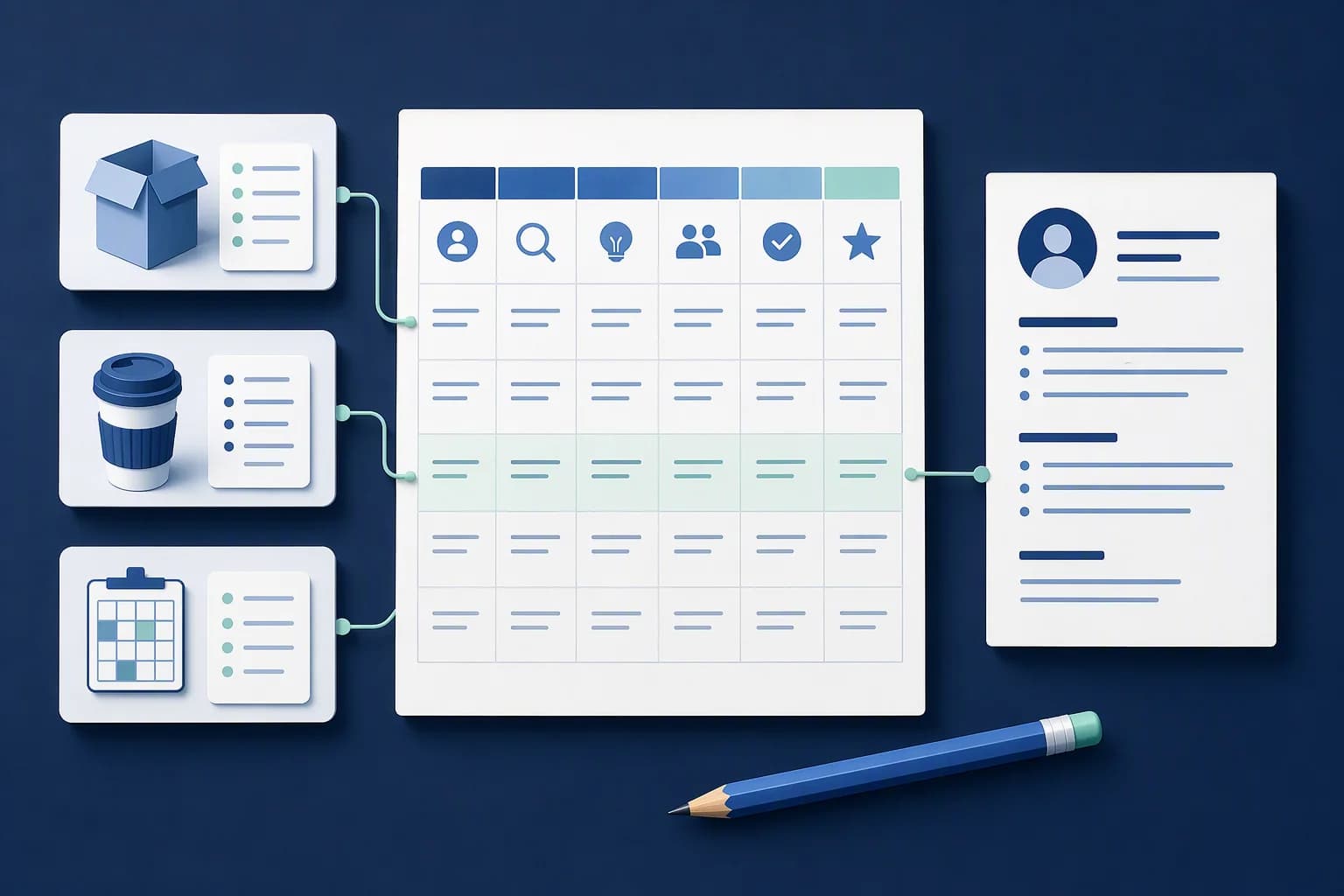
Use the table to map the process you are offered. Employers can combine, reorder or omit these stages. Ask what remains after the meeting in front of you.
| Stage | Possible focus | Useful question |
|---|---|---|
| Application review | Experience and stated requirements | Is anything missing from my application? |
| Recruiter conversation | Role basics, motivation and practical constraints | What are the stages and expected time commitment? |
| Hiring manager interview | Relevant work and team needs | Which problems would this person take on first? |
| Technical or work assessment | Skills, reasoning or a work sample | What will you assess and which resources are allowed? |
| Team or final conversations | Further evidence and remaining questions | What does this conversation need to establish? |
| Offer and checks | Terms and any outstanding conditions | What must happen before the offer and start date are confirmed? |
Use the first recruiter call to confirm the basics
Establish whether the opportunity fits before investing in detailed preparation. Ask whether you are discussing a specific, approved vacancy and whether the recruiter represents the employer or an agency. If some information is unavailable, agree who can clarify it and when.
Keep the conversation focused on details that could change your decision. For a remote or international role, the advertised location and your permitted working location may need separate confirmation; use the remote-job eligibility checklist for that discussion.
- What is the role’s level, reporting line and main responsibility?
- Why is the team hiring, and what would success in the first months look like?
- Where can the person work, and what attendance or time-zone overlap is expected?
- What contract arrangement and compensation range are available for this location?
- Which stages remain, who takes part and what time commitment should I plan for?
Connect each interview to the work being assessed
Ask what the hiring manager needs to learn from the next conversation. ‘System design’ is more useful preparation information when you also know whether the discussion concerns a new system, an existing one or an example from your career.
Find out who you will meet and their relationship to the role. Prepare relevant examples and questions about the work: how priorities are set, who makes technical decisions and how the team handles problems. Use the answers to assess the job as well as to present yourself.
The National Careers Service’s interview tips recommend reviewing the job description and application, preparing examples and writing down your own questions. Our guide to preparing interview examples turns that preparation into a reusable set of stories.
Clarify a take-home task or live assessment before starting
Request the brief, expected effort, deadline and evaluation criteria. Ask how the submission will be discussed and whether the exercise uses a fictional problem or work the company intends to use. If payment, ownership or confidentiality terms matter to your decision, clarify them before agreeing.
Check which tools and resources are permitted, including documentation, search, collaboration and AI assistance. A rule from another employer or a previous interview may not apply here. For a live task, confirm the environment and any setup you need to complete.
If the deadline or format creates a practical barrier, explain the constraint and ask what alternatives are available. Discuss accessibility adjustments with the recruiter early enough to arrange them; the National Careers Service also flags this preparation step.
Agree on a next step and an update date
At the end of a conversation, ask what happens next, who will contact you and when an update is expected. Distinguish an estimated date from a confirmed appointment. Microsoft’s guidance explicitly recommends asking the recruiter or hiring manager about the timeline.
If you have a real deadline from another process, share the date and ask whether this employer can work within it. Avoid inventing competing offers. A clear constraint is enough to let the recruiter discuss what is possible.
Write down the agreed action in plain language: ‘Recruiter to confirm technical interview slots by Thursday’, for example. That record gives you a reason and a date for following up. An application status label on its own rarely gives you that detail.
Follow up using the date you agreed
If the expected update date passes, send a brief message to the agreed contact. Mention the role, the last conversation and the update you are seeking. If no date was discussed, ask for a timeline rather than assuming a universal waiting period.
Keep other suitable applications moving while you wait. Silence leaves the outcome unknown; it does not establish either rejection or an offer. If you decide the uncertainty no longer fits your plans, you can pause your effort or withdraw clearly.
After a rejection, you can ask for specific feedback and record anything useful for future preparation. The National Careers Service recommends reflecting on difficult questions and asking for feedback; a request does not guarantee that the employer will provide it.
Check what an offer still depends on
Ask for the offer and terms in writing, including the role, pay, working arrangement, intended start date and response deadline. Ask which checks or approvals remain and who confirms that they are complete. Discuss when any references will be contacted, especially if your current employer is not aware of your search.
Legal effects and hiring checks depend on the jurisdiction and circumstances. As a UK-specific example, GOV.UK distinguishes conditional and unconditional job offers and advises employees to wait for an unconditional offer before handing in notice. It also states that offers and acceptance can be verbal or written, and that accepting an unconditional offer creates a legally binding employment contract. Written confirmation helps clarify the terms; a signature is not the only point at which acceptance can matter under that guidance. Do not treat the UK page as the rule for every country or contract.
Use the job-offer comparison and negotiation guide to evaluate the package. Confirm unresolved terms with the employer and use relevant local guidance when a legal or contractual question affects your decision.
Keep a record that tells you what to do next
After each interaction, keep the role, contact, current stage, assessment instructions, next action and expected date together. Separate what the employer actually said from your interpretation. If a message is ambiguous, seek clarification before treating it as a decision.
The CVer application-history guide explains how to review an opportunity’s status and history. If you connect recruitment email, read the original message when an automated classification suggests a change. A status update is useful context; the source message establishes what was communicated.
Common questions
How many interviews should a recruitment process have?
There is no single number to expect across employers and roles. Ask for the planned stages, the purpose of each and whether additional assessment is possible. Evaluate the total time and remaining uncertainty against your interest in the role.
Does a final interview mean I will get an offer?
No. Ask what the final conversation assesses and what decisions or checks remain afterwards. Treat an offer as an offer only when the employer communicates it, then clarify its terms and any conditions.
When should I ask about salary?
Ask about the available range and contract basics early enough to decide whether to continue. Confirm the location and level attached to that range. You can discuss a complete package in more detail when the role and offer are clearer.
Can I ask for a different assessment deadline?
Yes, you can ask. Explain your availability or the constraint, propose a realistic alternative and confirm the agreed deadline in writing. The employer’s ability to accommodate the request depends on its process.
Sources and further reading
- Interview tips for all rolesMicrosoft Careers · Accessed
- Interview tipsNational Careers Service · Accessed
- Job offers: your rightsGOV.UK · Accessed